Hi, I'm Brian, a retired creative problem solver and applied scientist. I’m from a large family of artists. I thought there was something wrong with me, until I understood that my artistic medium is words and errata…
Errata? Are you one of those writers?
No, not at all. My stories might get as bad as a PG-13 movie, but only for the ‘grownup’s stories.’ All my children’s books and even some of my grown up books are more like G movies.
‘Errata’ is the word for errors in publications. It used to be they would add a page of corrections, the Errata, as well as the Index or Table of Contents pages. I see my writing as art, just like the rest of my family makes.
Their paintings aren’t photo perfect… Their pottery isn’t corning ware perfect… Because they make art, not factory products. Paintings can be duplicated in factories, ie prints. Pottery can be duplicated in factories, ie molds. Likewise, my art can be (and is) duplicated in factories, ie published.
(I make hand written books, but those are expensive. I publish books to make them affordable and these days, I even make less expensive books, tele-published, ebooks right into your device.)
But I still see my work as art, as imperfect, with imperfections, like any other art. AI can make ‘perfect’ English. I’m not AI. (I oppose AI, even in editing art.)
There’s a good chance an ‘English Teacher’ has you triggered by some errors. (OMG! Theirs a gramer err! Your a terrible arthur!)
I’m sorry that happened to you, too. I like to imagine what the world would be like if painters were shunned for making errors. Oh wait, they were. Monet, van Gogh, etc… (I’m not them, but neither are a lot of good artists, in my family.)
People (committees and AI) can write error free stories that are still bad. It’s my belief, that people (and maybe AI) can write stories that are good, even with errors. (Like Shakespeare did. I’m no Shakespeare, but I’m working on it.)
About Brian Garrison:
About GarrisonSiFi:
I write science fiction that I would call optimistic, hard, and moderately cozy. I write what I would like to read. I hope you will like it, too.
Optimistic Fiction…
When I was a kid, grownups talked about how the world was going to be destroyed in a nuclear war. It wasn’t. When I became a grown up, people still talked about how the world was going to end, soon. It didn’t. Now I’m old, and the world is still about to end, soon. (And, I’m still prepping.)
Based on most of the writing today, authors believe the world will end in dystopia, soon. I disagree. I write what I want to read, and I don’t want to read that dark… poop.
I think the world will survive. Sure, the oil will run out sooner or later. (We’re burning it faster than geology can make it.) Sure, the oceans will rise. (They rise, they fall.) Earth continues. People and “life, uh, finds a way” - Jurassic Park. So, I like to write ‘optimistic’ stories about the future. Not utopias, but not dystopias, either.
Hard Science…
“The shields are failing!” “Reverse the polarity!” “Yay, we’re saved!” - various
Yeah, that kind of magical, fantasy, science doesn’t work for me. I warn you. Do not reverse the polarity in your car. I don’t know what it will do, but ‘save you’ is not what I predict.
So, likewise, I want to read science fiction stories that are more science than fantasy.
When Heinlein wrote Stranger in a Strange Land (1961), it seemed obvious to him that we would have flying cars in the future. Nope, not yet.
He also predicted that future manned Mars missions would send film cameras…
(For you young people, cameras couldn’t be phones. They didn’t even need batteries. Film was plastic, coated with light sensitive chemicals. It had to be ‘developed’ to make ‘negatives.’ Then paper, with other light sensitive chemicals, could be ‘developed’ to make pictures, positive prints from negative film.)
Heinlein predicted spaceships would return the film to Earth for developing and printing. At the time, we had TV, but he still predicted a future need for film photography. Oops, missed that one the other way.
So, will my predictions of our future, hard science be real? Not likely. I’m no Heinlein, and he couldn’t predict the future. But at least I try to make non-fantasy science.
Moderately Cozy…
There’s a range of anti-cozy to extreme cozy stories.
On the anti-cozy side are stories about good guys killing a lot of people, to stop bad guys from killing a lot of people. (Wait, which is which?)
On the extreme-cozy side are stories about friends sitting around a coffee shop telling stories about nothing.
I try to be in the middle or toward the more cozy side. No sexy hero is killing to save the world from a super villain’s apocalypse now. But there is adventure, conflict, non-violent problem solving, and sometimes friends, sitting in a coffee shop, enjoying good company.
Honestly, I love Pride and Prejudice (Austen, 1813), no murder, no save the world, but plenty of drama. I aspire to write such ‘cozy’ stories.
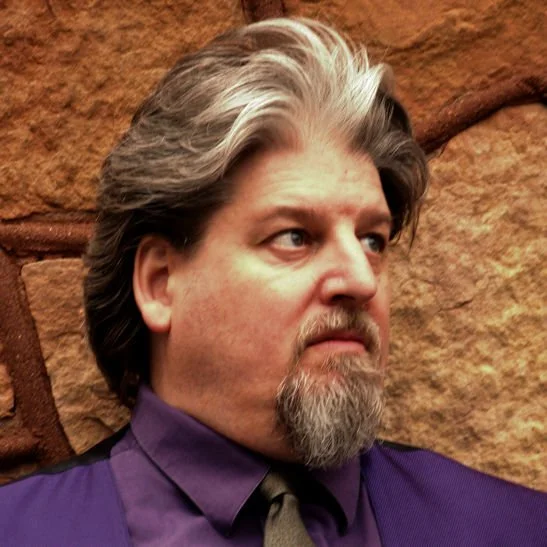
A memorable hair day, early in the 21st century, when my gray hair was only a spot in front.